Agentic AI Approval Fatigue and Rubber-Stamp Governance
When Human-in-the-Loop Stops Protecting the Workflow
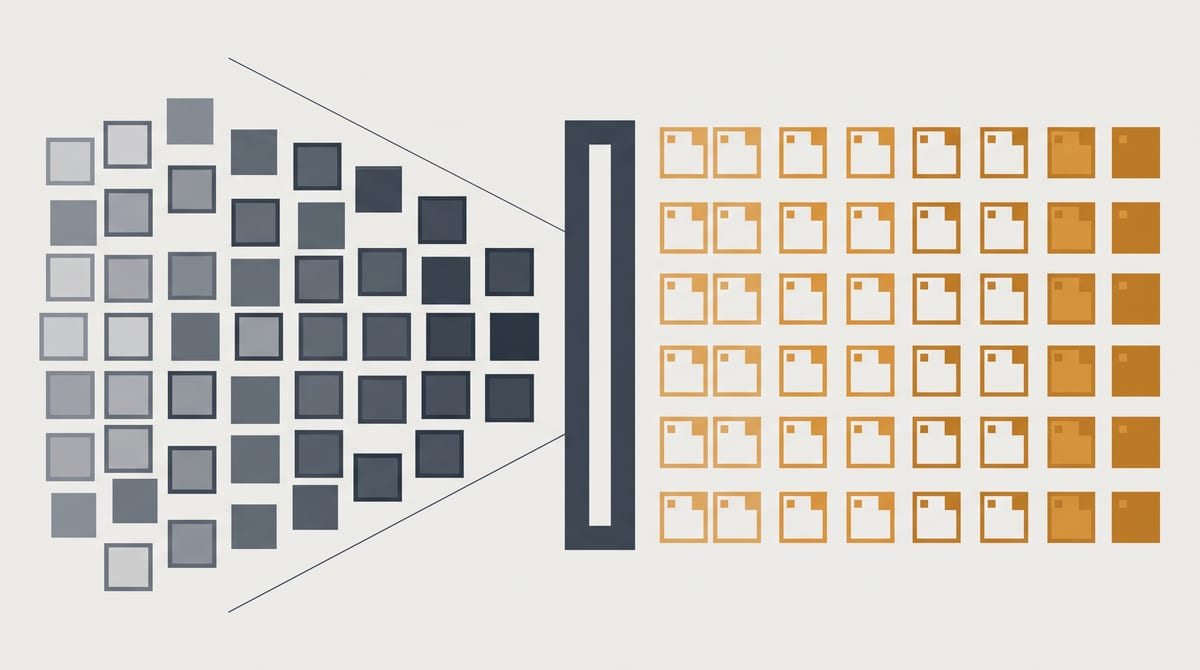
Approving everything and approving nothing produce the same audit trail.
The Failure Mode Is Now in the Vendor Guidance
AWS's Well-Architected Agentic AI Lens opens its guidance on human review of agent actions with a sentence worth reading twice: routing every agent action through human review produces rubber-stamp approvals.
That is not a critique from outside the industry. It is published architecture guidance from a hyperscaler telling architects that the obvious safety measure, review everything, degrades into the absence of the safety measure. The same page lists insufficient reviewer context as an anti-pattern that turns review into a formality.
Organizations deploying agents are converging on human-in-the-loop as the control that makes the deployment defensible. The control has a load limit, and the guidance now says so.
The Mechanism
The degradation is predictable and it runs the same way every time.
An agent is deployed. Output volume rises, because that is why the agent was deployed. Every action routes to a queue for approval. The queue grows faster than the reviewer pool. Time per item falls. Falling time per item means the reviewer stops reading the reasoning and starts pattern-matching the shape of the request. Pattern-matching produces correct approvals for the routine ninety percent, which trains confidence in the pattern. Confidence in the pattern is what carries the reviewer past the item that needed a real look.
At every point the log shows a human approval with a name and a timestamp. The audit trail is complete. The oversight is gone.
This is the operational drift sequence with a queue attached. Adoption increases, output volume increases, verification rigor decreases, false confidence increases, human review becomes performative, drift accumulates, and liability emerges. Approval volume is the accelerant.
That last step is not hypothetical. AI Incident Law indexes the public matters where an AI failure became a docket entry, a tribunal order, or an agency action. Read a few and the recurring shape is an approval that existed and a review that did not.
Risk-Tiered Review Is the Structural Fix
The AWS guidance prescribes the architectural answer: pause agents only for decisions where human judgment changes the outcome.
As a baseline it puts read-only operations through autonomously, low-risk writes behind single-reviewer approval, and higher-risk operations such as financial transactions, data deletion, and external communications behind stricter approval. The classification itself should be deterministic, using policy engines and rule-based classifiers rather than an LLM exposed to the same untrusted content as the request being judged, because adversarial content could otherwise talk the classifier into a low-risk label. Around that sit context sufficient for an informed decision, defined time windows, escalation paths for unavailable reviewers, timeouts with safe fallbacks, and logged approvals.
Adopt that and the queue shrinks to the decisions that deserve a person. Reviewer attention concentrates where consequence lives. This is the right design and organizations should implement it.
It also assumes the thing it cannot check.
Structure Does Not Answer the Behavioral Question
A well-tiered queue delivers the consequential ten percent to a reviewer with full context and adequate time. Everything now rests on what that reviewer does with a fluent, plausible, well-structured proposal containing one wrong load-bearing detail.
Two drift states show up at that gate, and both survive good architecture.
The Governance Cosplayer performs review without doing it. The behavior is recognizable: fast approvals, no annotations, no questions back to the requester, an unblemished record of agreement. The hidden risk is that the role reports as staffed and functioning. The escalation path is nominally open and has never carried traffic. The governance implication is that the organization's stated control is unexercised. The observable signal is a reviewer who approves seeded errors at the same rate as clean items.
The Unverified Escalator moves the item up the chain unchanged. The behavior looks conscientious, because something got escalated. The hidden risk is that escalation without verification transfers an unchecked artifact to someone with less context and more authority. The governance implication is that senior sign-off inherits an error it has no way to see. The observable signal is escalation with no accompanying verification work.
Neither pattern is a character flaw and neither is visible in the approval log. Both are behavior under load, and both are measurable.
Two Different Programs
Runtime guardrails are an Infrastructure-vector concern. Risk classification, approval mechanics, timeouts, blast-radius limits, tool permissions, and durable logging all belong to the agent platform and the teams that run it. That work is necessary and PAICE does not do it. PAICE does not instrument agent actions, sit in the approval path, or observe production traffic.
Whether the people at the gate hold verification behavior under volume is a People-vector question. PAICE (People + AI Collaboration Effectiveness) measures it directly: present realistic work containing errors, observe detection, verification, rejection, correction, and escalation, and return scores rather than transcripts.
An organization can pass its agent security review and still be approving errors at a steady rate all quarter. The architecture review will not find that. It is not looking at the person.
Design the tiering so the queue is short. Then find out whether the reviewer at the short queue catches things.
Want to know whether your approvers catch what the queue sends them? Take the PAICE assessment or learn about organizational baselines.
Recommended Reading
- What "Meaningful Human Review" Actually Requires - The competencies behind the approval step
- Who Gets the Safe Yes - Assigning AI approval authority on behavioral evidence
- When Polish Impersonates Authority - Why fluent output defeats an old professional heuristic
- When Your Agent Leaves the Building - What agents need at the boundary of the organization
Curious but short on time?
Take the 3-minute PAICE Pulse — a quick confidence check that maps how you see your own AI collaboration posture. No login required.