How to Audit Human Oversight in AI-Enabled Workflows
A Behavioral Evidence Checklist for Governance Teams
This article is for educational purposes and does not constitute legal advice or certification criteria. Organizations should consult qualified counsel about obligations that apply to them.
An approval step with no record of what the approver saw is not oversight. It's just a timestamp.
The Approval Exists. The Oversight Might Not.
A claims decision carries a reviewer's name. A regulatory filing was countersigned. A clinical summary shows a sign-off from a licensed clinician. In each case the workflow diagram has a human in it and the record has a signature on it.
None of that establishes that anyone looked.
Governance teams are increasingly asked to attest that human oversight in AI-enabled workflows is effective. The word doing the work in that sentence is effective. An audit that confirms an approval step exists has confirmed the diagram. This piece is about auditing the thing itself.
The Checklist Already Exists in Statute
The EU AI Act's Article 14 is the most specific published description of what oversight means operationally, and it reads like an audit list.
For high-risk systems, oversight must be exercisable by natural persons who properly understand the system's capacities and limitations, monitor operation to detect anomalies and dysfunctions, remain aware of automation bias, correctly interpret output using the tools available, decide not to use the output or to disregard, override, or reverse it, and intervene or halt operation. Article 26(2) puts a matching duty on deployers to assign persons with the necessary competence, training, and authority.
Two things follow. First, an organization outside the EU can still use this list, because it is the clearest available articulation of oversight competence and appears in substantially similar form across other frameworks. That portability is the point of modeling law by what it requires rather than by what it says, the approach the Obligation-First schema formalizes: read across instruments for the duty, and the same audit questions survive a change of citation. Second, and easily missed after the Digital Omnibus rescoping in July 2026, Article 14 does not become applicable until December 2, 2027. That is not relief. It is runway, and it is the last stretch of it.
ISO/IEC 42105, the guidance standard for human oversight of AI systems, points in the same direction and is worth watching, though as of August 2026 it has not been published as an International Standard.
Six Questions and the Artifact That Answers Each
1. Context. Did the reviewer have what they needed to judge? Ask what was in front of the reviewer at decision time: the proposed output alone, or the reasoning chain, the source material, and the consequences of accepting it. Artifact: the stored decision context. If the system retained only the approval, the honest audit finding is that context is unknown.
2. Competence. Does the reviewer hold standing in the domain? Ask what qualifies this person to detect a subject-matter error, not what qualifies them to hold the role. Artifact: role definition mapped to credential, plus the AI-specific component covering system limitations and automation bias.
3. Time. Was there enough of it? Divide review volume by reviewer hours for a real period. A reviewer holding ninety approvals a day is not performing ninety reviews. Artifact: queue volume against staffing, and the distribution of time-to-decision. A tight cluster near zero is the signal to chase.
4. Authority. Can this person say no? Ask when someone in this role last rejected, modified, or escalated an output, and what happened to them afterward. Artifact: override and rejection counts by role over twelve months. A role with formal authority and zero exercised rejections has authority on paper.
5. Escalation. Is the path live? Ask who receives an escalation, within what window, and whether the route has been used. Artifact: escalation records with outcomes. An untested path is a documented intention.
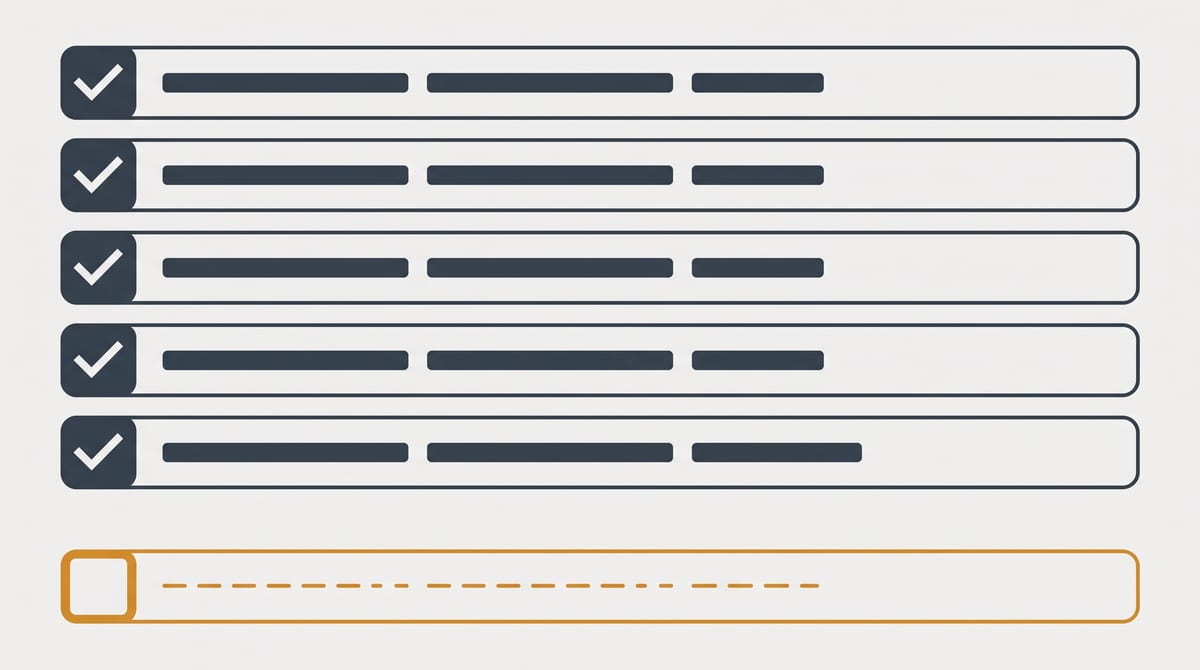
6. Detection. Would the reviewer catch it? Introduce a plausible, well-formed error into a realistic item and observe whether the reviewer finds it under normal working conditions. This is the question the other five are proxies for.
The Records That Make Oversight Auditable
Questions one through five are answerable if, and only if, the workflow retains the right records at the moment of review: reviewer identity, timestamp, the decision context presented, the decision taken, any override or modification, and the outcome of any escalation. Retention needs to be durable and queryable.
Most organizations discover during the audit rather than before it that their approval logs store the approval and discard the context. That finding is worth reporting on its own, because it is fixable in the workflow layer and it is not fixable retrospectively.
Where AI agents are involved, the same requirement now appears in vendor architecture guidance. AWS's Well-Architected Agentic AI Lens calls for logging approval decisions with reviewer identity and timestamps specifically to produce an auditable record of human oversight, and names insufficient reviewer context as an anti-pattern that turns review into a formality.
Where the Checklist Runs Out
Five of the six questions are records questions. Build the logging, run the queries, report the findings.
The sixth is not. No record shows whether a reviewer would have caught the error, because the errors that matter are the ones nobody caught, and a workflow log cannot contain the miss it did not detect. An approval log tells you the reviewer approved. It cannot tell you whether approval was warranted.
Answering that question requires observing behavior against known-wrong material. That is the narrow thing PAICE (People + AI Collaboration Effectiveness) does. It presents realistic work containing seeded errors and measures whether the operator detects, verifies, rejects, corrects, and escalates. It returns scores, not transcripts, and it holds no names, prompts, or conversation text.
An oversight audit that answers five questions and marks the sixth as unknown is a better audit than one that never asked. An audit that answers all six is evidence.
Want the behavioral evidence for question six? Take the PAICE assessment to see how detection is measured, or learn about organizational baselines.
Recommended Reading
- What "Meaningful Human Review" Actually Requires - The five behavioral competencies review demands
- Audit Trails for AI-Assisted Decisions - Documenting how a decision was made
- The Proof Gap - Why AI collaboration risk lacks an evidence system
- What PAICE Is Actually Testing For - The behaviors the assessment observes
Curious but short on time?
Take the 3-minute PAICE Pulse — a quick confidence check that maps how you see your own AI collaboration posture. No login required.